Shinfield South Ward, ENG - Postcode - RG7 1JY
Postcode RG7 1JY serves Shinfield South Ward in the Berkshire district of England. It is part of the RG7 outward code area. Use the map below for the exact location.
More postcodes in Berkshire | Browse RG7 area | All postcodes in Shinfield South Ward
Location Information
| City/Location/Ward | Shinfield South Ward |
|---|---|
| County/District/Region | Berkshire |
| States or Province or Territories | England |
| States or Province or Territories Abbrieviation | ENG |
| Postcode | RG7 1JY |
GPS Coordinate
| Item | Description |
|---|---|
| Latitude | 51.3959 |
| Longitude | -0.996 |
Nearby Postcodes
| Location | Postcode |
|---|---|
| College Town Ward | GU15 4NR |
| College Town Ward | GU15 4NU |
| College Town Ward | GU15 4NX |
| College Town Ward | GU15 4NY |
| College Town Ward | GU15 4PA |
| College Town Ward | GU15 4PD |
| College Town Ward | GU15 4PE |
| College Town Ward | GU15 4PJ |
| College Town Ward | GU15 4PL |
| College Town Ward | GU15 4PQ |
Browse All
Maps & Location
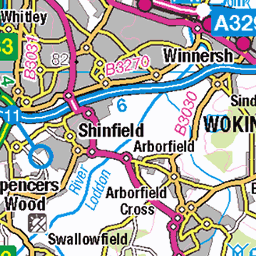
Shinfield South Ward is located in Berkshire
About Shinfield South Ward
Introduction
Shinfield South was an electoral ward in the Wokingham area of Berkshire, England, covering part of the wider Shinfield parish and surrounding communities immediately south of Reading. The ward formed part of Wokingham Borough and was represented by three borough councillors under the electoral arrangements that applied before the 2024 boundary changes. The name remains useful when discussing the area's recent political, planning and development history, although the borough's electoral map has since changed. The 2024 arrangements reorganised the former Shinfield South area, with parts moving into the new Shinfield and Spencers Wood & Swallowfield wards.
For visitors, residents, prospective homebuyers and anyone researching Berkshire, Shinfield South is best understood not simply as an administrative boundary but as part of a rapidly changing landscape south of Reading. The area combines an established rural village environment with major housing development, new community facilities, employment growth, improved roads and expanding links to the wider Thames Valley economy.
Shinfield itself is an ancient settlement. Shinfield Parish Council describes the village as being just south of Reading, within the unitary authority area of Wokingham, and notes that the parish covers approximately 4,313 acres, or 17.45 square kilometres. The parish's landscape extends from higher ground across a central ridge towards the Kennet Valley to the west and the River Loddon to the east and south.
This mixture of countryside, historic settlement and large-scale modern development is one of the defining characteristics of the Shinfield area. A visitor can encounter traditional village buildings, agricultural land and mature greenery alongside newly constructed streets, schools, sports facilities and employment sites.
Where Is Shinfield South?
Shinfield is located immediately south of Reading, making the area particularly significant for people who want access to Reading while preferring a village or suburban setting. The wider parish includes Shinfield Village, Spencers Wood, Three Mile Cross, Ryeish Green, Grazeley and Shinfield Rise/North.
The M4 motorway is an important geographical feature. The motorway was constructed through the area in 1971 and physically separated the northern portion of Shinfield Parish, including Shinfield Park, from the village to the south. This helped shape the modern geography of the area and its relationship with Reading.
Shinfield's position also provides an important connection between Reading and the communities farther south and east in Berkshire. Road links make it attractive to commuters, while the wider Thames Valley provides a substantial employment base.
The former Shinfield South electoral ward should therefore not be confused with Shinfield Parish as a whole. Electoral wards are administrative divisions created for representation, while the parish is a civil parish with its own council and community identity. The boundaries and names of these divisions can change over time.
The Local Government Boundary Commission for England's 2023 recommendations retained Shinfield as a distinct borough ward while creating the new Spencers Wood & Swallowfield ward. The 2024 reorganisation subsequently changed the electoral geography, meaning that historical references to Shinfield South need to be understood in their former boundary context.
A Brief History of Shinfield
Shinfield has roots extending back well before the modern development of the Reading commuter belt. The parish council identifies the settlement as having Anglo-Saxon origins and notes that Shinfield is recorded in the Domesday Book. The village therefore has a history stretching back for many centuries.
The historic landscape was shaped by agriculture, country estates, farms, lanes and village institutions. Before the expansion of Reading and the arrival of modern transport infrastructure, Shinfield was primarily a rural community.
The name of Shinfield is associated with the landscape around the settlement. The parish council explains that the name is thought to derive from the appearance of the local fields, with the area's eastern landscape influenced by the River Loddon and regularly flooded fields.
The rural character has not disappeared, but it now exists alongside a much larger population and a more diverse local economy. Housing growth in the late twentieth and early twenty-first centuries transformed parts of the parish, while the major development south of the M4 accelerated this transformation.
The historic village remains an important reference point. School Green and the surrounding streets provide a sense of the older settlement, while roads leading towards newer residential areas demonstrate how dramatically the community has expanded.
For people interested in local history, Shinfield offers an opportunity to observe how a traditional Berkshire village has adapted to metropolitan growth without completely losing its older identity.
Landscape and Natural Environment
One of Shinfield's greatest assets is its varied landscape. The parish sits across a central ridge, with land falling towards the Kennet Valley in the west and the River Loddon in the east. This creates a mixture of higher ground, open fields, woodland, hedgerows and lower-lying areas.
The River Loddon is particularly important to the area's geography. It forms part of the eastern and southern boundary of the parish and contributes to the character of the surrounding countryside.
The landscape also explains why development and environmental management are major subjects in the area. Large housing schemes require roads, drainage, open space and ecological measures to be incorporated into new neighbourhoods.
Planning documents for the former Shinfield South ward demonstrate the mixture of land uses being considered in the area. Sites identified in planning work included land around Pound Green, Shinfield Grange, Church Lane, Hyde End Road and Stanbury Park. Proposed uses included housing, offices, public open space and Suitable Alternative Natural Greenspace.
This illustrates an important feature of modern Shinfield: development is not simply about adding houses. It also involves creating infrastructure and managing the relationship between built-up areas and the surrounding countryside.
For residents, parks, green corridors, playing fields and open spaces provide opportunities for walking, recreation and informal outdoor activities. For visitors, these spaces help explain the area's transition from rural settlement to modern suburban community.
Shinfield Village and Community Character
Shinfield Village remains at the heart of the area's identity. Despite the scale of recent construction, the older village continues to provide a recognisable community centre.
The village is associated with School Green, traditional buildings, local roads and established community facilities. Pubs and restaurants also contribute to the social character of the settlement.
Among the local establishments are The Shinfield Arms, a well-known gastropub on Shinfield Road, and The Six Bells on Church Lane. Bell & Bottle at School Green is another established local pub. These venues form part of the everyday social infrastructure of the village.
The village's traditional character is particularly noticeable when contrasted with the newer residential developments. Streets constructed during the expansion of Shinfield are generally planned around modern housing layouts, pedestrian routes, open spaces and access to newly built facilities.
This contrast is not necessarily a weakness. Instead, it gives the area two distinct layers: an older village core and an expanding modern community.
Major Development South of the M4
The most significant modern change in Shinfield has been the major development south of the M4. Wokingham Borough Council describes the project as a major development area in Shinfield Parish, extending the villages of Shinfield, Spencers Wood and Three Mile Cross.
The scale of the project is substantial. The council reports that approximately 3,000 new homes have been built or are at an advanced stage, together with new community facilities, schools, playing fields, open spaces, roads and employment areas.
This development has changed the physical appearance and demographic profile of the area.
New neighbourhoods have introduced large numbers of households, creating demand for schools, shops, healthcare, recreational facilities, public transport and community services. The development has therefore required infrastructure to grow alongside housing.
One of the most important elements is the district centre. According to Wokingham Borough Council, the development includes an improved community centre and a new Lidl supermarket, alongside a neighbourhood centre.
The development also includes new roads, including a relief road and a bridge over the M4. Such infrastructure is essential in an area where existing roads were originally designed for much smaller rural communities.
The transformation is therefore much broader than residential construction. Shinfield is increasingly functioning as a substantial settlement within the wider Reading and Wokingham economic area.
New Homes and Residential Life
Housing growth is one of the defining issues for Shinfield South and the wider parish.
Modern developments have introduced a broad range of properties, including family houses and smaller homes. The expansion has attracted people seeking newer housing within commuting distance of Reading and the wider Thames Valley.
Shinfield Meadows is one example of the newer residential developments in the area, located around Hyde End Road. Other development activity has taken place around Cutbush Lane and other parts of the south-of-the-M4 growth area.
New housing has created opportunities for first-time buyers, families and people moving into the Reading area, while also increasing pressure on local infrastructure.
Planning records from the former Shinfield South ward show that housing proposals were associated with several sites, including Pound Green Fields, Pound Green Yard, land at Church Lane, Oakwood/Croft Road, land near Woodcock Court and land north of Hyde End Lane.
The scale of these proposals illustrates how the area was expected to evolve over a long period rather than through a single development project.
For residents, the result is a neighbourhood environment that can feel distinctly new in some locations. Wide streets, contemporary homes, landscaped areas and new pedestrian routes contrast with the narrow lanes and older buildings found closer to the original village.
Schools and Education
Education has been a major part of the development strategy for the area. New housing creates demand for additional school places, making education infrastructure a central component of planned growth.
Wokingham Borough Council identifies a new primary school at Alder Grove as one of the facilities associated with the south-of-the-M4 development, with another school planned at Spencers Wood.
The development of new schools is important not only for families but also for community cohesion. Schools often become focal points for local activities, parent networks, sports and community events.
For families considering Shinfield, access to education is therefore an important part of evaluating the area. The expanding population means that school provision and future capacity remain subjects of considerable local interest.
The education landscape also benefits from Shinfield's relationship with the University of Reading. The university has been involved in the wider development and employment ecosystem south of the M4.
This connection gives the area an unusual combination of village living, university-related activity, research and modern employment.
Employment and the Thames Valley Science Park
Employment growth is another major feature of modern Shinfield.
The Thames Valley Science Park forms an important employment destination within the south-of-the-M4 development. Wokingham Borough Council lists Shinfield Studios, the British Museum and the Natural History Museum among organisations with occupants or activities connected to the employment area.
The presence of major cultural and research institutions contributes to the changing economic identity of Shinfield.
The area is increasingly connected to sectors such as science, research, technology, media and professional services. This is significant because the traditional rural economy of the parish has gradually been complemented by knowledge-based and service-sector employment.
Shadowbox Studios Shinfield is another visible example of the area's modern media and production economy. Its presence adds an unexpected creative-industry dimension to a location historically associated with agriculture and village life.
For local residents, employment opportunities closer to home can potentially reduce commuting distances. At the same time, Shinfield's proximity to Reading, Wokingham and the wider Thames Valley means that residents have access to a much larger regional employment market.
Roads and Transport
Transport is central to understanding Shinfield South.
The area's location immediately south of Reading provides convenient access to a major urban centre, while the M4 offers connections towards London, the Thames Valley, Bristol and other parts of southern England.
However, rapid housing growth has also made transport capacity an important planning concern. Existing roads that once served a comparatively small rural population have had to accommodate significantly more traffic.
The south-of-the-M4 development has therefore included new roads and a relief road with a bridge over the motorway. Wokingham Borough Council identifies this infrastructure as part of the wider development programme.
Walking and cycling have also become increasingly important considerations in new neighbourhood design. Modern developments generally incorporate pedestrian routes and cycle connections alongside conventional roads.
The area's transport situation is consequently evolving. Residents may enjoy excellent access to Reading and the motorway network, but commuting patterns and congestion can vary considerably depending on time of day and precise location.
For visitors, a car can be useful for exploring the wider Berkshire area, although the proximity of Reading means that local journeys do not always require long-distance travel.
Recreation, Parks and Open Space
Recreation has been incorporated into the area's expansion rather than treated as an afterthought.
The south-of-the-M4 development includes new playing fields and open spaces, providing areas where residents can exercise, walk and participate in organised sport.
Open space is particularly valuable in a rapidly growing community because it provides a physical connection between new neighbourhoods and the landscape that existed before development.
Langley Mead is a local attraction and open-air destination associated with Hyde End Road. Such spaces add to the recreational character of the area and provide opportunities for residents and visitors to spend time outdoors.
The surrounding countryside also creates opportunities for walking and exploring rural lanes. The landscape towards the River Loddon and the Kennet Valley is particularly important for anyone interested in the natural side of Berkshire.
The challenge for planners is maintaining these green connections while accommodating population growth. The inclusion of Suitable Alternative Natural Greenspace in planning proposals demonstrates the importance attached to providing recreational and environmental capacity alongside new development.
Food, Pubs and Everyday Amenities
Although Shinfield is close to Reading, the village retains a selection of local establishments that support everyday social life.
Traditional pubs remain important gathering places. The Shinfield Arms, The Six Bells and Bell & Bottle provide different settings for meals, drinks and informal meetings.
For quick food, Shinfield Takeaway is another local option.
The continuing presence of these businesses demonstrates that Shinfield is more than a dormitory settlement. It has an active local community and a growing commercial environment.
The arrival of newer neighbourhood centres and supermarkets is likely to increase the range of everyday services available locally. Wokingham Borough Council's description of the south-of-the-M4 development includes both a district centre and neighbourhood centre, reflecting the intention to create communities where residents can access more services without travelling into central Reading.
Community and Local Government
Shinfield Parish Council plays an important role in local community life. The parish is warded and has its own elected councillors, while Wokingham Borough Council provides the wider unitary-authority structure.
The distinction between parish and borough government can sometimes be confusing. The parish council deals with local community matters within its responsibilities, while the borough council handles broader services such as planning, highways, housing, education-related functions and other local government responsibilities.
The electoral structure has changed significantly in recent years. The 2024 boundary review introduced new arrangements affecting Shinfield Parish, including changes involving Shinfield North, Shinfield Village and other parish areas. Wokingham Borough's electoral wards were also reorganised.
This means that historical references to Shinfield South should be treated as references to the former ward rather than automatically assumed to represent the current electoral geography.
For anyone researching property, planning applications, elections or local government records, checking the date of the information is particularly important.
Housing Needs and Local Pressure
Rapid population growth also brings housing challenges.
A 2023 Wokingham Borough Council freedom-of-information response recorded 141 people or groups in need of housing in the then-Shinfield South ward, including 16 requiring accommodation suitable for disabilities, mobility issues or older residents. The council recorded all 141 as requiring social housing in that particular response.
Although this figure represents a particular point in time rather than a permanent measure of housing need, it illustrates the pressures that can accompany a growing community.
New private housing does not automatically eliminate demand for affordable or social housing. As communities expand, local authorities must balance market housing, affordable housing, infrastructure and access to services.
This is one reason why planning remains such an important part of the Shinfield story.
The Character of Modern Shinfield
Perhaps the most distinctive feature of Shinfield South is the coexistence of different landscapes and lifestyles.
There is the historic village, with its older buildings, village green and traditional establishments. There are rural lanes and agricultural fields. There are established residential neighbourhoods. And there are large new developments containing contemporary housing, schools, employment sites and community infrastructure.
The area is consequently neither wholly rural nor conventionally urban.
Its identity is increasingly that of a modern Berkshire community built around an old village framework. The proximity of Reading gives it an urban connection, while the countryside and River Loddon landscape provide a rural backdrop.
This combination is likely to remain central to the area's identity as Shinfield continues to mature.
Visiting and Exploring the Area
A visit to the former Shinfield South area is best approached as an exploration of contrasts.
Starting around the historic village allows visitors to understand the older community. From there, travelling through the newer residential districts demonstrates the scale of twentieth- and twenty-first-century expansion.
The wider parish can then be explored through its countryside, green spaces and neighbouring settlements. Shinfield's relationship with Spencers Wood and Three Mile Cross is particularly important because the communities have increasingly become part of the same wider development and transport landscape.
Visitors interested in architecture can compare older Berkshire village buildings with modern housing. Those interested in planning can observe how roads, schools, open spaces and commercial centres are being integrated into new neighbourhoods.
For families, parks, playing fields and community facilities are particularly relevant. For commuters, the area's relationship with Reading and the M4 is likely to be the most important consideration.
For history enthusiasts, the village's Anglo-Saxon and medieval background provides a much deeper story than its modern suburban appearance might initially suggest.
Looking Ahead
Shinfield's future will continue to be shaped by development, infrastructure and the challenge of maintaining local character.
The major south-of-the-M4 development has already delivered thousands of homes and substantial infrastructure, but the consequences of this growth will continue to influence the area for years. Schools, roads, shops, public spaces, employment and community services must all develop alongside the population.
At the same time, the area's historic and environmental assets need to remain part of its identity. The River Loddon, surrounding countryside, village landscape and green spaces provide an important counterbalance to development.
Shinfield therefore represents a useful example of how a historic English village can become part of a rapidly expanding metropolitan region while retaining elements of its original character.
The former Shinfield South ward is especially useful as a historical lens through which to understand this transformation. Its boundaries may have changed, but the underlying story remains: a traditional Berkshire landscape undergoing one of the most significant periods of growth in its modern history.
Shinfield South as a Place to Live
Shinfield South and the wider Shinfield area offer a distinctive combination of village character, suburban convenience and proximity to a major employment centre. For people considering the area as a place to live, one of its strongest attractions is its position immediately south of Reading. Residents can enjoy access to the facilities and employment opportunities of Reading while living outside the central urban environment.
The area is particularly appealing to families because of the combination of housing, schools, green spaces, sports facilities and road connections. New neighbourhoods have been designed with family life in mind, while the older village provides a more established setting.
The housing landscape is varied. Older properties can be found around the historic village, while newer developments offer contemporary houses and apartments. This creates a mixture of architectural styles and neighbourhood environments.
For prospective residents, the precise location within the former ward is important. A home close to the original village may feel considerably different from one within one of the large new developments south of the M4. The age of the property, availability of parking, access to schools and distance from major roads can all influence the experience of living in the area.
Another advantage is the area's relationship with the wider Berkshire countryside. Residents do not have to travel far to find open fields, riverside landscapes and rural walking routes.
Family Life in Shinfield
Families form an important part of the growing Shinfield community. The expansion of housing has been accompanied by investment in education, recreation and community infrastructure.
New schools have helped address the needs of the growing population, while sports pitches and open spaces give children and adults opportunities for outdoor activities.
The village environment also provides opportunities for children to grow up with a stronger sense of local community. Sports clubs, schools, community events and local organisations can all contribute to this.
For parents, the area's proximity to Reading is another advantage. Reading provides access to a much wider range of cultural, educational, retail and entertainment facilities.
At the same time, the increasing population creates challenges. Popular schools can experience pressure on places, roads can become busy during peak periods and new development can temporarily create a sense that neighbourhoods are still unfinished.
These are common characteristics of rapidly expanding communities. Over time, new commercial centres, landscaping and community facilities can make newly constructed districts feel more established.
Shopping and Local Services
One of the major changes associated with the south-of-the-M4 development has been the expansion of local shopping provision.
The development includes a Lidl supermarket and a district centre, alongside a neighbourhood centre. (wokingham.gov.uk)
This is important because residents of new housing developments need everyday services within reasonable walking or cycling distance.
The traditional village and newer development areas complement one another. Older establishments provide continuity, while modern retail facilities respond to the needs of the expanding population.
For larger shopping trips, Reading remains the principal regional destination. The town centre and surrounding retail areas offer extensive choices in fashion, groceries, restaurants, entertainment and professional services.
Wokingham is also accessible and provides another major shopping and service centre.
This gives Shinfield residents a useful balance: local amenities for everyday needs and larger nearby towns for more specialised shopping.
Restaurants, Cafés and Social Spaces
The food scene around Shinfield reflects the area's changing population.
Traditional pubs remain important because they offer meals and social space while connecting modern residents with the village's older identity. The Shinfield Arms, The Six Bells and Bell & Bottle are examples of establishments that contribute to the local hospitality scene.
The arrival of new residents has also created demand for different forms of food and drink. As populations grow, independent takeaways, cafés and restaurants often become important elements of neighbourhood life.
Reading's proximity significantly expands the choice available. Residents can reach restaurants representing cuisines from around the world without having to travel to London.
For visitors, combining a walk around Shinfield village with a meal or drink at a local establishment can provide a simple way to experience the area's traditional community character.
Sport and Leisure
Sport is another important component of life in Shinfield.
The major development south of the M4 includes playing fields and open spaces. These facilities are important for organised sports as well as informal recreation. (wokingham.gov.uk)
Football, cricket, running, walking and children's outdoor activities can all benefit from the area's combination of sports grounds and open land.
The wider Wokingham area has a strong culture of organised community sport, with clubs and facilities serving different age groups.
For residents who prefer less structured recreation, walking is one of the easiest ways to enjoy the landscape. The countryside surrounding Shinfield contains footpaths and rural roads that provide opportunities to explore the area's agricultural heritage.
The River Loddon landscape is particularly attractive for those interested in nature and quieter outdoor activities.
Walking and Cycling
The expansion of Shinfield has placed greater emphasis on pedestrian and cycling connections.
Older parts of the settlement were not necessarily designed around modern assumptions about walking and cycling. New developments, however, can incorporate dedicated paths, crossings and connections between housing, schools, parks and shops.
This makes active travel particularly relevant to families.
Walking to school, cycling to local facilities or using paths through open spaces can reduce dependence on cars for short journeys.
Nevertheless, the area's road network remains highly important. The M4 and major roads connecting Shinfield to Reading and neighbouring settlements carry significant traffic.
The balance between car travel and active travel is likely to remain an important consideration as the community continues to grow.
Shinfield and Reading
The relationship between Shinfield and Reading is fundamental to the area's identity.
Reading is one of the most economically significant towns in the Thames Valley and provides employment across technology, finance, professional services, education, retail, healthcare and other sectors.
Shinfield's location makes it possible for residents to participate in Reading's economy without living within the town itself.
The connection is also cultural. Residents can easily access Reading's theatres, cinemas, restaurants, libraries, museums, shopping areas and sporting events.
This proximity means Shinfield does not need to provide every type of urban facility locally. Instead, the village and new neighbourhoods can concentrate on everyday needs while Reading provides a broader regional role.
The relationship works in both directions. Shinfield's employment sites and newer commercial facilities attract people from outside the immediate village.
Shinfield and Wokingham
Wokingham is another important nearby centre.
The town has its own historic character, retail facilities, restaurants, schools and civic institutions. It is also the administrative centre of Wokingham Borough.
For Shinfield residents, Wokingham provides an alternative to Reading for shopping, services and leisure.
The two towns therefore create a wider network of opportunities around Shinfield. This contributes to the area's appeal to people who want suburban or village living without sacrificing access to major facilities.
The University of Reading Connection
The University of Reading has a particularly significant relationship with Shinfield.
The university's Whiteknights campus lies close to the area, while the Thames Valley Science Park south of the M4 forms part of the wider university-related economic ecosystem.
This connection has helped strengthen the area's association with research, science, innovation and education.
The Science Park is particularly significant because it creates an employment environment that differs from the traditional office and retail economy of nearby Reading.
For students and university employees, Shinfield can therefore offer convenient access to the university while providing a different residential environment from central Reading.
The university connection also reinforces the area's long-term potential as a location for knowledge-intensive businesses.
Science, Technology and Innovation
The Thames Valley has developed a reputation for technology and innovation, and Shinfield is increasingly part of this regional economy.
The Thames Valley Science Park provides space for businesses and organisations associated with science, research and technology. Its presence demonstrates how the area's economic role has expanded beyond traditional village commerce.
The development of Shinfield Studios adds another dimension. Media production creates employment in creative, technical and support roles, potentially attracting workers who would not traditionally have considered Shinfield an employment destination.
The result is a more diversified local economy.
Rather than simply serving as a residential suburb for people working elsewhere, Shinfield increasingly contains workplaces of its own.
Shinfield Studios and the Creative Economy
The emergence of Shinfield Studios is one of the more remarkable aspects of the area's recent transformation.
Film and television production facilities are not what many people would traditionally associate with a Berkshire village. Yet the development reflects the changing nature of the Thames Valley economy.
Large production facilities require substantial space, specialist infrastructure and access to skilled workers. Shinfield's location provides proximity to Reading, London and major transport networks while allowing more space than central urban locations.
The studio presence may also create opportunities for local businesses, hospitality providers and specialist contractors.
This illustrates a broader trend: areas outside traditional media centres can increasingly participate in the creative economy when they have suitable infrastructure and transport connections.
Planning and the Future of Development
Planning remains one of the most important subjects in Shinfield.
The area's rapid growth has required decisions about where homes should be built, how roads should connect, where schools should be located and how green spaces should be protected.
Planning records for the former Shinfield South area demonstrate the scale of development pressure. Sites included land around Pound Green, Shinfield Grange, Church Lane and Hyde End Road, among others. (wokingham.gov.uk)
Such planning activity demonstrates that the transformation of Shinfield has not been a single event. It has involved multiple sites, applications and infrastructure decisions over many years.
For residents, planning applications can affect traffic, views, property values, construction activity and access to amenities.
For the local authority, the challenge is to accommodate housing requirements while maintaining environmental quality and ensuring that infrastructure keeps pace.
Protecting the Rural Setting
Despite extensive development, the rural setting remains a major part of Shinfield's character.
The surrounding countryside creates a clear distinction between Shinfield and Reading. Protecting this distinction is important to residents who value the village environment.
Green spaces can also provide environmental benefits, including habitats for wildlife, opportunities for trees and vegetation, and natural drainage.
The River Loddon and associated landscape are particularly important environmentally.
Future development will therefore need to consider not just how many homes can be built but also how those homes interact with the wider landscape.
Community Identity
Rapid population growth can sometimes make a place feel less cohesive, particularly when large numbers of residents move into newly constructed neighbourhoods at the same time.
Shinfield has responded to this challenge through community organisations, schools, local businesses, sports activities and parish institutions.
The established village provides a sense of continuity. New residents can become part of the wider community while still living in neighbourhoods that may look and feel very modern.
Community facilities are therefore essential.
The new and improved facilities associated with the south-of-the-M4 development are intended to provide places where residents can meet, participate in activities and establish local networks. (wokingham.gov.uk)
Over time, these facilities can help new neighbourhoods develop their own identities.
Local Events and Village Life
Village events can play a valuable role in maintaining community identity.
Traditional celebrations, school events, charity activities, sporting competitions and parish activities give residents opportunities to interact outside work and home.
The presence of older village institutions makes it easier for Shinfield to maintain a sense of continuity despite rapid development.
At the same time, new residents bring their own interests and community initiatives. This can create a more diverse social environment.
The result is a community that combines traditional village institutions with the energy of a rapidly growing population.
Property Considerations
For people researching property in Shinfield, location within the area is particularly important.
Older homes may provide larger gardens, established landscaping and traditional architectural features, but they may also require more maintenance.
New-build properties generally offer modern insulation, contemporary layouts and new infrastructure. However, buyers should consider estate management charges, the maturity of landscaping and the time required for new neighbourhoods to fully develop.
Transport access can also make a major difference. Homes close to major roads may be convenient for commuters but can experience more traffic noise.
Similarly, properties near schools, shops and community facilities can be highly convenient for families but may experience more activity during busy periods.
The area's ongoing development means buyers should also examine nearby planning proposals rather than considering only the immediate surroundings.
Accessibility and Connectivity
Shinfield's strongest practical advantage remains connectivity.
Reading is nearby, the M4 provides national road connections, and Wokingham is within easy reach. London can be accessed through the wider railway network from Reading, while the Thames Valley's employment centres are connected through a combination of road and public transport.
This makes the area attractive to commuters.
However, connectivity also brings pressure. Major roads can become busy, particularly during peak commuting periods.
New infrastructure has been introduced to manage some of the consequences of growth, but transport remains a central issue in discussions about the area's future.
Services and Healthcare
Residents benefit from access to healthcare facilities in the wider Reading and Wokingham areas.
Local GP and pharmacy services support everyday healthcare needs, while Reading provides access to larger medical facilities and specialist services.
As the population increases, healthcare demand naturally increases as well. Planning for new communities therefore requires consideration of primary healthcare capacity alongside schools and retail.
This is another example of why large residential developments require more than houses. A successful community needs access to a broad network of services.
The Changing Meaning of “Shinfield”
The word Shinfield now describes more than the traditional village.
For some residents, Shinfield means the historic settlement around School Green. For others, it refers to the wider parish or one of the new residential neighbourhoods.
The former Shinfield South ward added another administrative meaning.
This can create confusion when searching for addresses, electoral information, planning applications or property listings.
The best approach is to distinguish between the historical electoral ward, the civil parish, the village itself and the current borough wards.
Administrative boundaries can change, but local identities often persist.
Why Shinfield South Matters in Berkshire
The former Shinfield South ward provides a useful example of wider changes occurring across Berkshire.
The county has experienced substantial population growth and development pressure because of its proximity to London, strong transport connections and highly developed Thames Valley economy.
Places such as Shinfield demonstrate how this pressure reaches beyond traditional urban centres.
A village can become part of a much larger economic and residential system without physically becoming part of a major town.
The result is a distinctive form of modern settlement: neither purely rural nor fully urban.
Practical Experience for New Residents
Someone moving to Shinfield should expect an area with considerable variation.
The historic village offers established surroundings and a stronger traditional character. Newer neighbourhoods offer modern homes and contemporary infrastructure.
The area is well positioned for people who commute to Reading or other Thames Valley employment centres.
Families can benefit from schools, parks, playing fields and growing local amenities.
People who value nightlife and extensive cultural facilities will probably continue to rely on Reading.
Those who enjoy countryside and outdoor activities will find plenty of opportunities in the surrounding landscape.
The main consideration is that Shinfield remains a developing community. Some areas have a mature village atmosphere, while others continue to evolve.
Conclusion
Shinfield South, considered both as the former Wokingham Borough electoral ward and as part of the wider Shinfield community, represents one of Berkshire's clearest examples of the transformation of a historic village landscape into a modern, connected community.
Its story begins with an old rural settlement whose origins stretch back centuries. The village developed around agriculture, local institutions and the surrounding countryside. Over time, its proximity to Reading and the expanding Thames Valley economy changed its role.
The M4 became a major geographical and economic influence, while housing growth south of the motorway transformed the scale of the community. Thousands of new homes, schools, playing fields, open spaces, employment sites, shops and transport infrastructure have created a much larger settlement environment.
Yet the older identity has not disappeared. Shinfield village, traditional pubs, historic buildings, rural lanes and the surrounding landscape continue to provide a sense of place.
The area's future will depend on how successfully these two sides are balanced. Continued development can provide homes, jobs and services, but long-term success requires strong infrastructure, good transport, environmental protection and opportunities for residents to build genuine community connections.
For families, commuters, professionals, students and visitors, Shinfield offers an unusual combination of advantages. Reading is close enough to provide major urban services, while Wokingham and the wider Berkshire countryside are also accessible. Local employment is becoming increasingly diverse through the science, research, education, technology and creative sectors.
The former Shinfield South ward is therefore more than an administrative label. It represents a period of significant change in which an established Berkshire landscape became increasingly connected to the economic life of the Thames Valley.
Today, the wider Shinfield area combines old and new: village and suburb, countryside and development, local community and regional economy. That combination is likely to remain the defining feature of Shinfield for many years to come.