
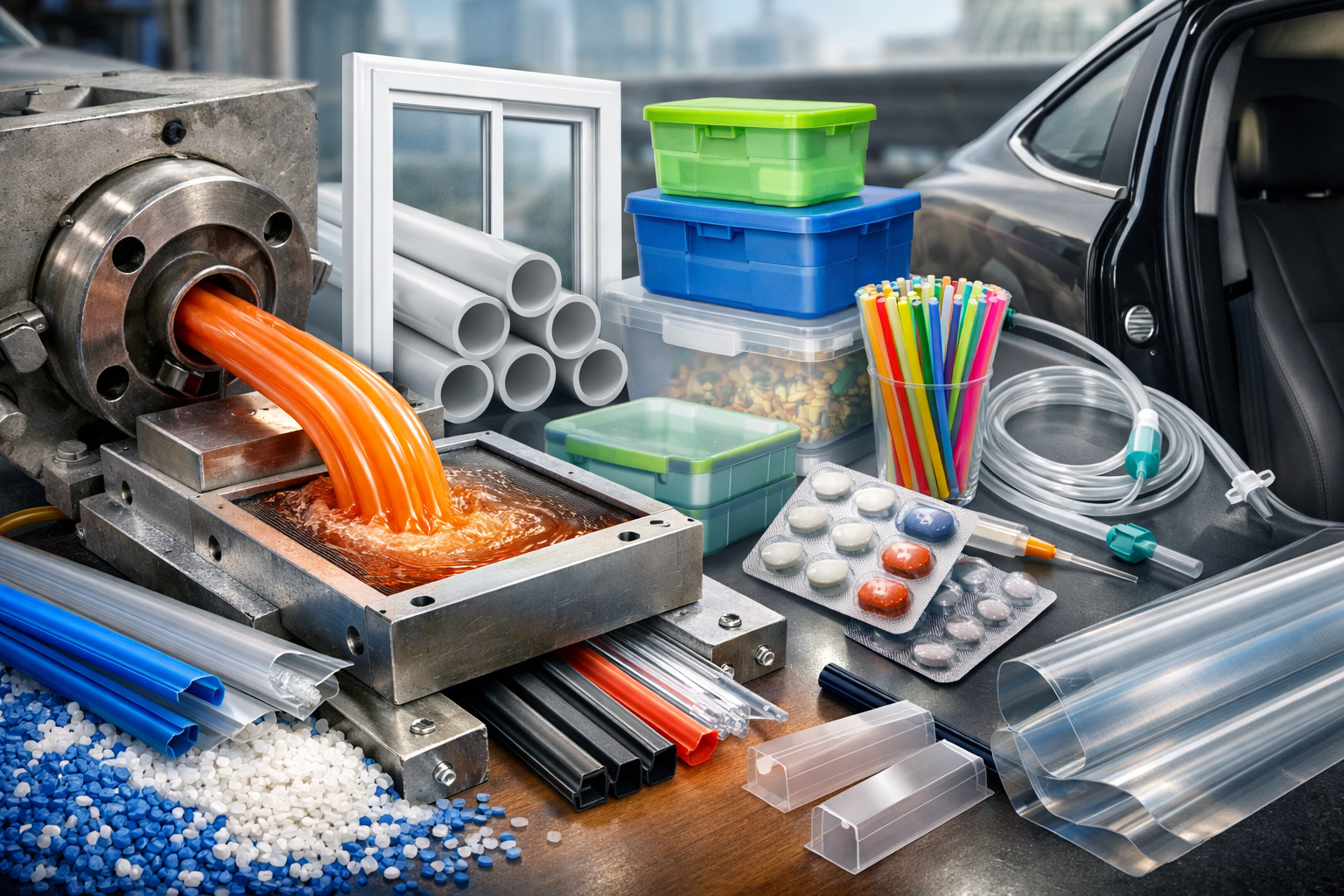
Look around your home, office, or even the street outside, and you’ll likely see dozens of products made using plastic extrusion—even if you don’t realize it. From window frames and water pipes to medical tubing and packaging materials, plastic extrusion plays a quiet but essential role in modern life.
This manufacturing process has become a global standard because it’s efficient, versatile, and capable of producing consistent, high-quality components at scale. In this article, we’ll explore what plastic extrusion is, why it’s used worldwide, and how it shapes everyday products across different industries.
What Is Plastic Extrusion?
Plastic extrusion is a manufacturing process where raw plastic material (usually in pellet or powder form) is melted and pushed through a specially designed die. The die shapes the molten plastic into a continuous profile, which then cools and hardens into its final form.
Unlike injection molding—which creates individual parts—extrusion is ideal for making long, continuous products with a consistent cross-section.
Common characteristics of extruded plastic products include:
-
Uniform shape along their entire length
-
Customizable thickness and dimensions
-
Compatibility with a wide range of plastic materials
Because of these advantages, extrusion is used across industries and continents.
Why Plastic Extrusion Is Used Worldwide
Plastic extrusion has gained global adoption for a few key reasons:
-
Cost efficiency: Once the tooling is created, large volumes can be produced at relatively low cost.
-
Material flexibility: Manufacturers can choose plastics based on strength, flexibility, UV resistance, or chemical resistance.
-
Scalability: The process works just as well for small specialty runs as it does for mass production.
-
Consistency: Extrusion ensures reliable dimensions and performance, which is critical for construction, medical, and industrial uses.
These benefits make plastic extrusion especially valuable in both developed and emerging markets.
Plastic Extrusion in Construction and Infrastructure
One of the largest users of plastic extrusion globally is the construction industry. Extruded plastic products are lightweight, durable, and resistant to corrosion—ideal for long-term infrastructure.
Everyday construction products made using plastic extrusion include:
-
PVC pipes for plumbing and sewage systems
-
Vinyl window and door frames
-
Siding and cladding panels
-
Electrical conduit and cable management systems
In many regions around the world, extruded plastic has replaced traditional materials like wood and metal due to its lower maintenance requirements and longer lifespan.
Household and Consumer Products You Use Daily
Plastic extrusion is also deeply embedded in everyday consumer products. These items are often so familiar that their manufacturing process goes unnoticed.
Common household products made through extrusion include:
-
Plastic tubing and straws
-
Storage bins and drawer organizers
-
Curtain rods and blinds components
-
Furniture edging and trim
Because extrusion allows for smooth finishes, custom colors, and precise dimensions, it’s ideal for products that must be both functional and visually appealing.
Plastic Extrusion in Packaging and Retail
Packaging is another area where plastic extrusion is heavily used worldwide. Extruded plastics help protect products, extend shelf life, and improve transportation efficiency.
Examples include:
-
Protective corner guards and edge profiles
-
Blister packaging components
-
Shrink wrap films and plastic sleeves
-
Display rails and signage holders
Retailers and manufacturers rely on extrusion to create lightweight packaging solutions that balance durability with cost-effectiveness.
Medical and Healthcare Applications
In healthcare, precision and reliability are non-negotiable. Plastic extrusion delivers both, which is why it’s widely used in medical environments around the world.
Extruded medical products include:
-
IV tubing and catheters
-
Oxygen masks and breathing tubes
-
Protective casings for medical equipment
-
Laboratory tubing and connectors
Medical-grade plastics used in extrusion are designed to meet strict safety and hygiene standards, ensuring they are biocompatible and easy to sterilize.
Automotive and Transportation Uses
The automotive industry relies on plastic extrusion to reduce vehicle weight without sacrificing performance. Lighter vehicles are more fuel-efficient, which is why extruded plastic components are now standard across global transportation markets.
Common automotive extrusion applications include:
-
Weather stripping and seals
-
Wire insulation and protective tubing
-
Interior trim and decorative profiles
-
Fluid transport lines
From passenger cars to trains and commercial vehicles, extruded plastics help improve efficiency, safety, and durability.
The Role of Local and Global Manufacturers
While plastic extrusion is a global process, it often depends on local expertise to meet regional standards, regulations, and customer needs. For example, businesses sourcing from plastic extrusion companies Miami may prioritize weather-resistant materials suitable for humid and coastal environments, while manufacturers in colder climates focus on impact resistance and thermal performance.
This balance between global technology and local customization is one reason plastic extrusion remains so widely adopted.
Sustainability and the Future of Plastic Extrusion
As sustainability becomes a global priority, the extrusion industry is evolving. Many manufacturers now use:
-
Recycled plastics
-
Bio-based polymers
-
Energy-efficient extrusion equipment
These innovations help reduce environmental impact while maintaining the performance consumers expect. Around the world, extrusion continues to adapt to meet stricter environmental standards and growing demand for responsible manufacturing.
Conclusion: A Process That Shapes Modern Life
Plastic extrusion may not always be visible, but its impact is everywhere. From the homes we live in and the cars we drive to the medical devices that support health and safety, extruded plastic products are essential to daily life across the globe.
As materials improve and sustainability efforts expand, plastic extrusion will remain a cornerstone of modern manufacturing—quietly shaping the products we rely on every day.