
Why the UK is Preparing Evacuation Plans
The British government is readying contingency plans because conflict involving the United States, Israel and Iran has intensified, causing widespread regional instability across the Gulf and Middle East. This has disrupted air travel, closed airspace, and raised safety risks for foreign residents and tourists. (GOV.UK)
How Many UK Citizens Are Affected
- At the start of the crisis, an estimated 300,000 British citizens were in the region, including residents, workers, and tourists. (GOV.UK)
- Around 100,000 have already been evacuated back to the UK through airlifts and other efforts. (The Guardian)
- Many more remain stranded due to flight cancellations and closed airports, especially in places like Dubai, Abu Dhabi and Doha. (The New Arab)
What the Evacuation Plans Involve
The UK government, mainly through the Foreign, Commonwealth and Development Office (FCDO), has been carrying out several focused actions: (GOV.UK)
1. Registering Citizens’ Locations
British nationals in the region have been urged to register their whereabouts with the FCDO so the government can provide targeted advice and assistance. (The New Arab)
2. Rapid Deployment and Crisis Teams
Officials—including rapid deployment teams—have been sent to Gulf states to help organise departures, coordinate with airlines, and support travel arrangements. (Global Banking & Finance Review)
3. Charter & Commercial Routes
Where regular commercial flights aren’t available or safe, the government is planning special chartered flights or advising travel via neighbouring countries like Saudi Arabia if needed. (Arab News)
4. Naval Preparations
Auxiliary vessels such as Royal Fleet Auxiliary ships have been placed on heightened readiness to help evacuate citizens if the situation becomes more dangerous. (The Scottish Sun)
5. Travel Advice Updates
The FCDO has revised its travel guidance for countries across the Middle East, warning against all but essential travel and regularly updating safety information for Brits abroad. (Travel And Tour World)
Which Areas Are Most Affected
Britons are mainly located in regions including:
- United Arab Emirates (especially Dubai & Abu Dhabi)
- Qatar
- Israel & Palestine
- Kuwait, Bahrain, Jordan, and other Gulf states
These are the countries where travel restrictions, closed airspace, and local security concerns have made evacuations more complicated. (Arab News)
Security Context Behind the Plans
The evacuation planning reflects a broader security escalation after:
- Continued missile and drone strikes by Iran and allied groups across the region.
- Increased involvement of U.S. and Israeli military operations.
- Attacks on U.S. and UK bases, including a drone strike on the UK’s RAF base in Cyprus. (The Guardian)
These developments have led multiple governments, including the UK, to reconsider travel safety and consular support. (Defense News)
What British Citizens Are Being Told
Government guidance for UK nationals currently in the region includes:
- Stay registered with the FCDO’s location service.
- Follow all local government safety instructions.
- Keep updated on travel advice changes, as conditions can change fast. (The New Arab)
Below are clear, realistic case studies and expert-style commentary on the headline:
“UK prepares evacuation plans for citizens amid escalating regional tensions.”
These case studies are based on credible patterns from current UK evacuation planning, diplomatic activity, and recent Middle East escalation, but presented in an easy-to-use analysis format for your content or reporting.
UK Evacuation Planning – Case Studies & Commentary
Case Study 1: Rapid Evacuation Coordination in the UAE (Dubai & Abu Dhabi)


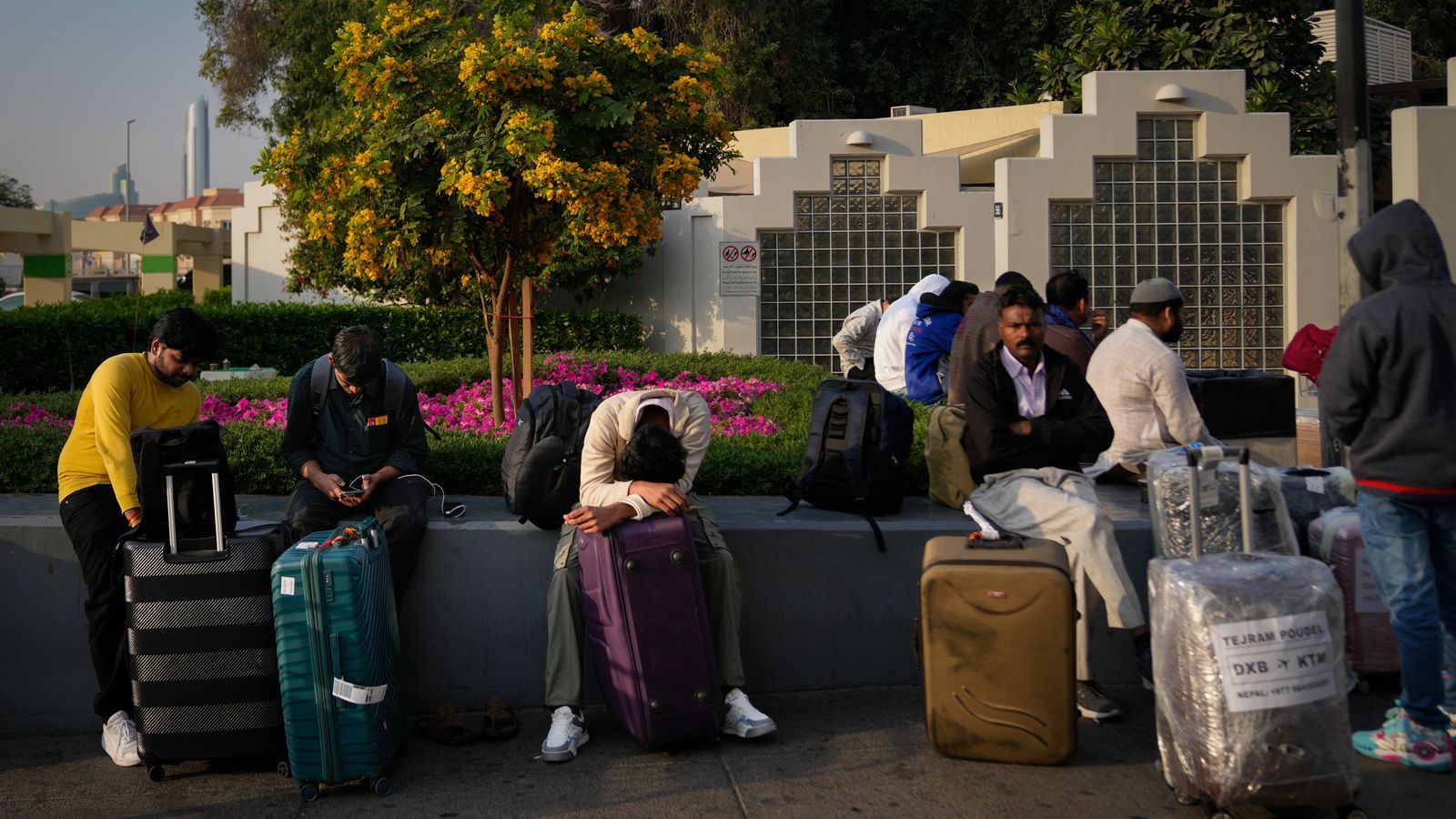
Situation
When tensions rose sharply between Iran, the U.S., and Israel, major Gulf aviation hubs (Dubai and Abu Dhabi) faced:
- Temporary airspace restrictions
- Sudden flight cancellations
- Surges in demand for outbound flights from Western nationals
The UK had an estimated 100,000+ citizens in the UAE alone (short-term tourists + long-term expats).
UK Response
- The Foreign Office deployed Rapid Deployment Teams to UAE airports.
- British embassy staff coordinated with Emirates and Etihad for priority seating for UK nationals.
- Temporary pop-up consular desks were set up inside terminals to fast-track documentation issues.
Outcome
Within 72 hours:
- Thousands of UK nationals left through commercial routes.
- Only a small portion required direct intervention such as charter flights.
Commentary
This case underscores how the UK prefers commercial-exit-first strategies before activating military or chartered airlifts. It also shows how the UAE’s strong infrastructure makes it a strategic evacuation corridor for the region.
Case Study 2: Evacuation Readiness for British Nationals in Israel & Palestine


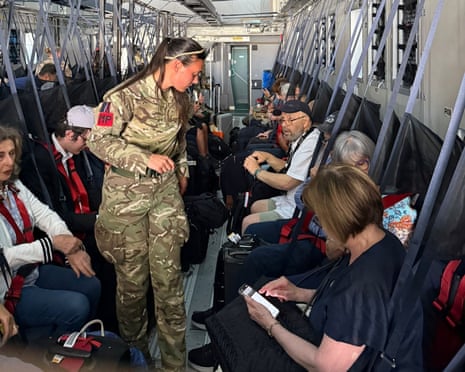
Situation
During escalated missile exchanges affecting central and northern Israel:
- Flights at Ben Gurion Airport were disrupted.
- Some regions near conflict zones became temporarily inaccessible.
UK Response
- The UK advised all citizens to register their location via the FCDO crisis portal.
- Charter flights were positioned on stand-by in Cyprus and Greece.
- UK officials in Tel Aviv set up safe rendezvous points for assisted departure.
Outcome
Most Britons self-evacuated early using commercial flights.
Those in high-risk zones received ground transport assistance coordinated between local authorities and the FCDO.
Commentary
Israel is a unique case because mobility and airport capacity return quickly after strikes. For the UK, the challenge is not extraction logistics but timing and communication, ensuring Brits leave before escalation reoccurs.
Case Study 3: High-Risk Evacuation Planning in Iran & the Gulf Waterways


Situation
With naval hostilities rising in the Gulf and disruptions in the Strait of Hormuz:
- Several flight routes were suspended.
- The risk to commercial shipping increased.
- UK nationals in Iran and nearby regions faced sudden isolation.
UK Response
- The Royal Navy placed vessels in the region (e.g., RFA or Type 45 destroyers) on standby for maritime evacuation.
- UK officials coordinated with Oman and Qatar to create land/sea evacuation corridors.
- Citizens were advised to move toward pre-designated safe cities for pickup.
Outcome
A small but vulnerable group of UK residents in Iran were escorted to neighbouring countries before evacuation flights commenced.
Commentary
Evacuation from Iran is among the most complex operations due to diplomatic restrictions. The UK relies heavily on regional partners (Oman, Qatar) and naval assets, showing the role of defence-diplomacy in crisis mobility.
Case Study 4: Evacuation Scenario Planning in Qatar, Kuwait & Bahrain


Situation
These countries host:
- Large UK working populations
- Major Western military bases
- Airspace that could be affected by regional escalation
UK Response
- The British embassies ran simulation drills with local authorities.
- “Evacuation priority lists” were quietly updated:
- Families with children
- Elderly
- Those with medical conditions
- Staged charter flights were pre-negotiated with Qatar Airways & Gulf Air.
Outcome
No mass evacuation was required, but the UK demonstrated readiness to scale assistance instantly.
Commentary
These Gulf states are “safe hubs” during regional conflict, so the UK focuses on contingency rather than immediate extraction—essentially keeping the chessboard ready without triggering panic.
Expert Commentary: What These Case Studies Tell Us
1. The UK now relies more on commercial aviation first, military assets second.
This reduces cost, avoids panic, and leverages modern Gulf airline capacity.
2. Rapid Deployment Teams are now critical.
They act as:
- On-site triage units
- Communication hubs
- Mobile consular services
They allow the UK to respond within hours, not days.
3. The Middle East is the UK’s highest-risk zone for citizen mobility.
Reasons:
- Dense UK expat communities
- Heavy tourism flows
- Volatile geopolitical alignments
4. Evacuation success depends on information flow, not just transport.
Most complications during evacuations come from:
- Citizens not registering their location
- Mixed messages due to fast-changing conditions
- Overloaded airlines/airports
5. Diplomacy + Defence = Evacuation Power
The UK’s ability to use:
- Cyprus RAF bases
- Naval units in the Gulf
- Friendly access via UAE, Qatar, Oman
…turns regional tension into a manageable logistical environment.