
What is the project
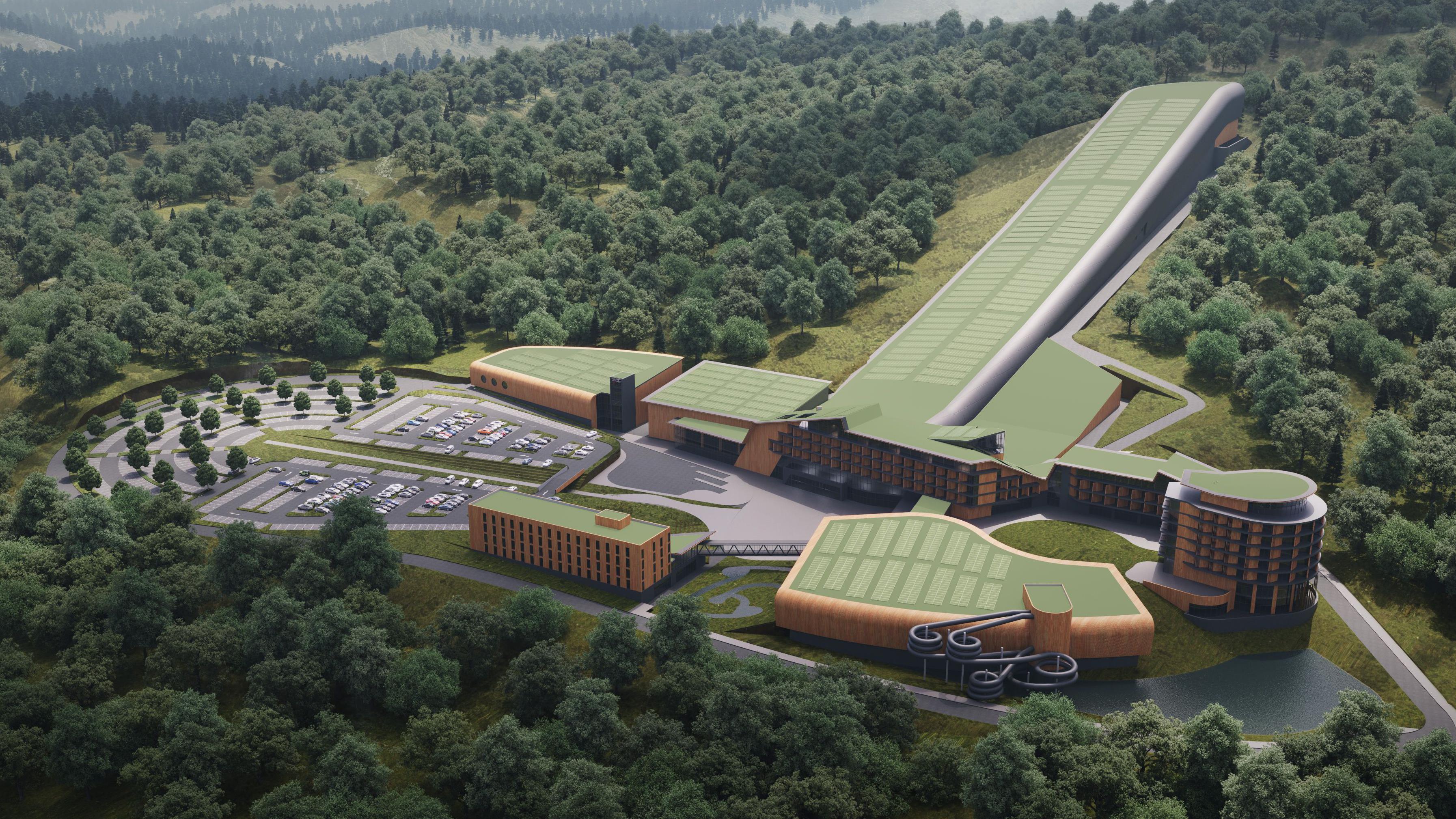
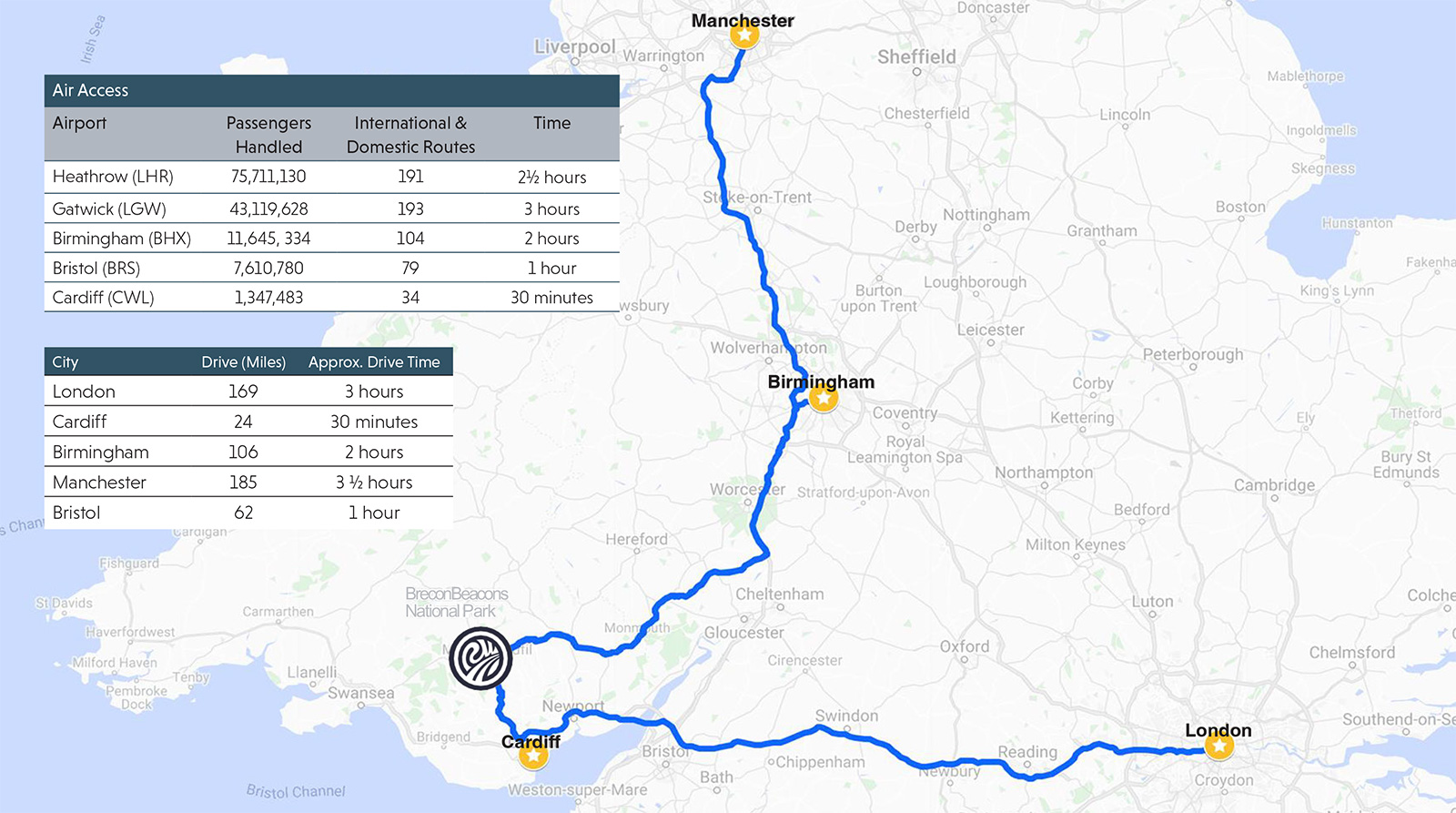
- The development is called Rhydycar West, located in Merthyr Tydfil, Wales — just off the A470. (The Independent)
- It’s a large-scale leisure resort, with a total investment of about £300 million. (Nation.Cymru)
What the resort will include
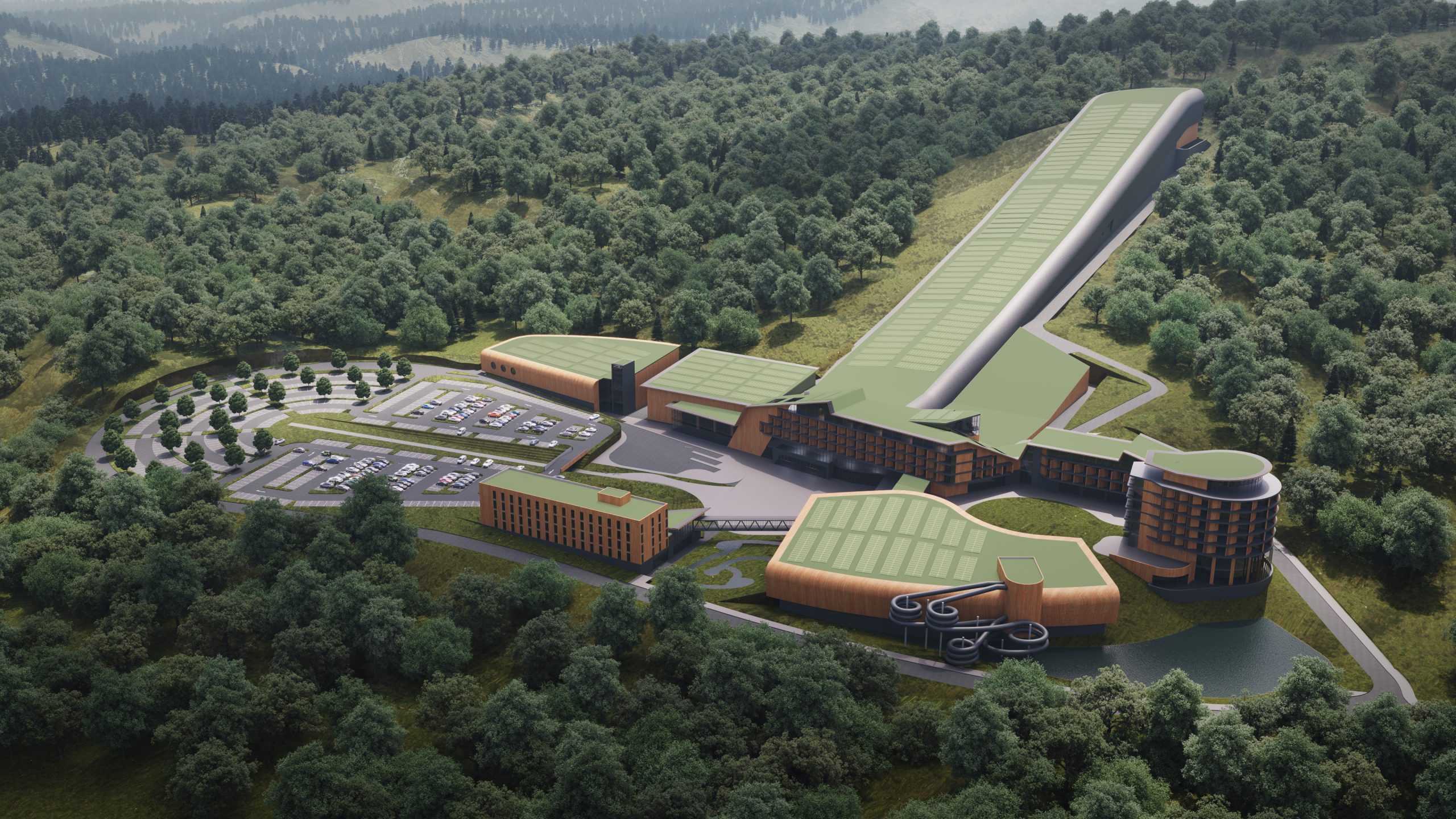
- The centrepiece: a fully indoor snow centre featuring a ski slope designed to be 400 metres long (some reports say between 400 m and 424 m). (Park World)
- If built, that would make it the longest indoor ski slope in the UK — far surpassing the current record-holder, the 180 m-long slope at Chill Factore. (Wikipedia)
- The resort will also include a tropical-themed waterpark, with features like water slides, artificial beaches, and surf simulators. (The Independent)
- Additional facilities: an indoor & outdoor adventure centre (e.g. activities, adventure attractions), a large hotel with up to 418 rooms, plus around 30 woodland lodges for lodging. (Park World)
Purpose, ambition & impact
- The developers plan for Rhydycar West to become the UK’s national centre of excellence for snowsport, and potentially the training base for Wales’ and Great Britain’s Olympic and Paralympic winter-sports teams. (Nation.Cymru)
- Economically, the resort is projected to create about 842 permanent jobs and contribute roughly £38 million per year to the local economy. (Park World)
- The project backers argue it would bring a major regeneration boost to the region; supporters described it as a “once-in-a-lifetime opportunity” for Merthyr Tydfil. (J2Ski)
Planning status & recent approval
- In March 2025, the local council (Merthyr Tydfil County Borough Council) voted to back the project — despite earlier officials’ recommendations to reject it. (Sky News)
- On 21 November 2025, the Welsh Government confirmed that it would not “call in” the planning application for further review — effectively giving the green light for the local planning authority to decide. (The Independent)
- Next step: the final formal decision by the planning authority (the Planning, Regulatory and Licensing Committee) is expected in early 2026. If approved, construction can begin. (The Independent)
Controversies & challenges
- The project has drawn concerns from environmental and conservation groups: critics warn about potential damage to ancient woodland, ecological harm to nearby protected land, and negative visual impact on the landscape. (J2Ski)
- During council deliberations, a recommendation to reject the plans was originally put forward — though councillors ultimately backed the project. (Sky News)
- No firm opening date has been announced yet — meaning there’s still a long road between approval and the resort becoming operational. As one recent article summed up, while “planning permission has been approved,” final construction and delivery remain in the future. (The Sun)
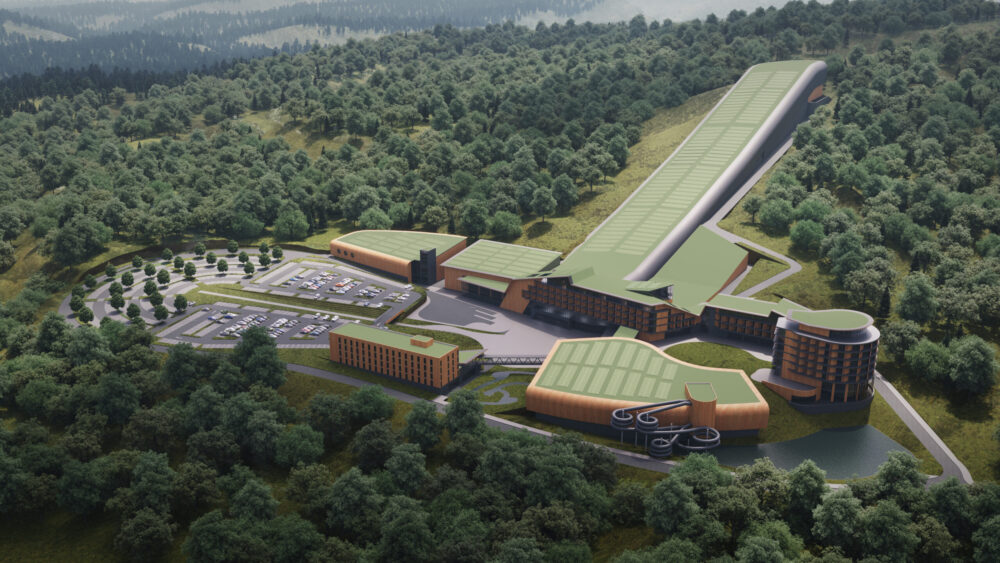
Here’s an updated summary — with case studies, various public / expert comments, and broader context — for the £300 million Rhydycar West development (the proposed UK’s longest indoor ski slope and leisure resort in Merthyr Tydfil, Wales). I try to show both the promises and the concerns, as expressed by different stakeholders.
What the project promises — ambitions, projected benefits & endorsements (Case-style)
- Major economic & employment boost — According to project planners: during construction phase, up to ~1,500 direct jobs, about 1,200 expected to come from local area. Once operational: ~842 permanent jobs (with ~663 from local area) plus indirect jobs. (Nation.Cymru)
- Significant long-term economic value — They estimate the project will contribute c. £38.1 million per year to the local economy once running. (Sky News)
- All-year leisure & sport destination — The plan includes not only a ~400–424 metre indoor ski slope (far longer than current UK indoor slope record), but also a tropical indoor water-park, indoor/outdoor adventure centres, hotels (up to 418 rooms), woodland lodges, conference facilities, plus accommodation wings — offering a full-service resort experience. (rhydycarwest.com)
- Sport development & elite athlete training hub — The developers (and national snowsport bodies) envision the ski-centre being a national “centre of excellence” for snow sports, serving as training HQ for Welsh and GB Olympic and Paralympic winter teams. (The Independent)
- Local regeneration & tourism stimulus — Supporters, including local political figures, say the resort could revitalize Merthyr Tydfil and the Valleys, turning the region into a key leisure & tourism destination in Wales — benefiting local businesses, supply chains, and broader regional development. (Nation.Cymru)
Case-style example: A local official said the resort would be a “beacon of hope and opportunity for Merthyr Tydfil,” highlighting transformative potential for the community by combining major investment, job creation and world-class leisure infrastructure. (Nation.Cymru)
Another example: The chief executive of the resort, after key planning approvals, described the move as “a huge step forward,” emphasising the resort’s role in boosting local economy, leisure provision, and national snow-sport capacities. (Sky News)
What opponents, planning officers & critics say — concerns, objections, environmental & heritage risk
Even among supporters there’s caution — and among planners and conservationists, real concern. Main criticisms:
- Ecological / environmental damage risk — The proposed site includes areas of ancient woodland, protected habitats: a Site of Special Scientific Interest (SSSI), a Site of Importance for Nature Conservation (SINC), parts protected by tree-preservation orders, public rights of way, plus historic remains (old mining activity, canals/railways, and listed/ancient-monument sites). The plan threatens habitat loss, biodiversity impact, disruption of ecological networks. (Nation.Cymru)
- Landscape, visual and heritage damage — Planning officers argued that the development’s scale and infrastructure (resort buildings, parking, lodges, waterpark, etc.) would significantly harm the character of the landscape — including a strategic landscape area known for its “wooded mosaic” setting, and the historic/industrial heritage of the region. (Herald.Wales)
- Conflicts with planning / conservation policies — The site overlaps with protected designations (SSSI, SINC, heritage listings), making it hard to meet national and local planning policy requirements, especially on biodiversity and landscape resilience. Planning officers concluded that economic benefits “would not outweigh the harm identified.” (Nation.Cymru)
- Sustainability and design-quality concerns — A design review by an independent body (the equivalent of a national design commission) raised “significant and fundamental concerns” about the sustainability, visual impact, overall design quality, and whether the scheme could blend meaningfully into the landscape — or just look like a massive “theme-park” in a sensitive natural/historic area. (Nation.Cymru)
- Risk that promises may not fully materialise — or benefit might be uneven — Some worry: access might prioritize elite athletes or tourists; local residents may not benefit equally. Others worry that increased traffic, pollution (noise, air), litter, and social disruption may follow once resort opens. (Nation.Cymru)
One striking quote from an opponent (via planning-officer report context): the development would cause “significant harm” to the ecological and landscape value of the site, and loss to protected woodland/SSSI areas — damage that may be irreversible. (Nation.Cymru)
What this project amounts to — two “real-life” case-study angles to watch
Here are two contrasting “case-study style” angles — useful if you were writing about this development (for example, as part of article or analysis):
Case Study A — “Regeneration + Opportunity”
- Region: Merthyr Tydfil / South Wales Valleys — historically industrial, with economic challenges, shrinking industry, deindustrialization.
- Intervention: Large-scale private investment (£300 m) into leisure + tourism + sport infrastructure aiming to diversify local economy.
- Expected outcomes: Job creation (construction & ongoing), new skills, tourism inflow, improved leisure facilities, national sport training hub, lodging & hospitality supply-chain growth, renewed town/regional identity.
- Supporting arguments: Backed by local politicians; national snowsport bodies; community petition (≈2,800+ signatories), local businesses; potentially long-term GVA benefit. (Sky News)
This case would illustrate how leisure + sport + tourism developments can act as catalysts for regeneration in regions affected by industrial decline — offering a model of “post-industrial reinvention.”
Case Study B — “Nature, Heritage vs. Development Risk”
- Context: The proposed site overlaps with ecologically sensitive habitats (SSSI, ancient woodland, conservation areas) and areas of historical/industrial heritage (old mines, canals, listed buildings).
- Problem: Large-scale resort construction may damage biodiversity, destroy or severely harm protected habitats, alter landscape character, compromise heritage sites, and cause long-term environmental degradation.
- Stakeholder concerns: Planning officers; environmental/conservation groups; heritage bodies; local residents worried about pollution, traffic, social disruption; risk that mitigation measures (re-location of wildlife, “off-site compensation land”, landscaping) may not fully offset losses. (Nation.Cymru)
- Implication: Even if economic benefits materialize, the environmental and heritage costs may make the project controversial — raising questions about sustainable development, long-term ecological legacy, and whether short-term economic gain justifies lasting environmental harm.
This case highlights the broader debate many regions face: balancing economic development with environmental & heritage conservation, and how “big-build” leisure projects might or might not be the right path forward.
Public / Expert Comments & Stakeholder Voices So Far
Here’s a sampling of some of the public / stakeholder sentiment, from news reports and planning-process records:
- The leader of the local council (Merthyr Tydfil) described the project as a “beacon of hope and opportunity” for the area. (Nation.Cymru)
- More than 2,800 people signed a petition in support of the scheme. (Park World)
- The CEO of the project, after the Welsh Government cleared the way for local authority to decide, said the decision was “a huge step forward,” and thanked community and partners for support. (The Independent)
- Representative of national snow-sport community: the head of the governing body for snowsport in Wales (and GB) described the news as “massive for snow sports in Wales and the wider GB community,” praising the opportunity to significantly expand access to skiing/snowboarding and elite athlete training. (The Independent)
- On the other hand, planning officers argued that ecological and landscape harm was serious, and that loss of protected habitats (SSSI, ancient woodland, historic sites) outweighed economic benefits. (Nation.Cymru)
- Design-review / conservation experts highlighted “significant and fundamental concerns” about the sustainability, visual and environmental impact — pointing to conflicts with national and local planning/heritage policy. (Nation.Cymru)
What to watch in coming months — critical decision points and factors
- Final planning decision — Although local councillors backed the project, and the national government chose not to “call it in,” the application still needs final sign-off by the local authority’s Planning, Regulatory and Licensing Committee. (The Independent)
- Design & environmental mitigation — will they satisfy policy? The objections from environmental / heritage bodies and design critics mean that the development must satisfy strict ecological / landscape standards, and provide credible mitigation (or compensation) plans for habitat loss, heritage disruption, visual impact. Whether the developers succeed will be closely watched.
- Community sentiment and long-term social impact — Even if built, whether the resort truly benefits local residents (jobs, access, tourism income) — vs. being a mostly tourist/elite-sport enclave — remains uncertain. Also, issues like traffic, pollution, cost of living, environmental consequences may affect long-term public opinion.
- Sustainability & viability over time — Indoor slopes are expensive to build and maintain. Whether demand (tourists + locals) will sustain it, especially in a changing climate and energy-cost environment, will be a real test.
What this means — Key Lessons & Broader Implications (for urban/regional development, sustainability, tourism)
- Big leisure & sport infrastructure can be a powerful tool for economic regeneration, especially in post-industrial or economically challenged areas — but only if balanced with environmental & heritage safeguards.
- Transparent, inclusive planning — including community consultation, environmental impact assessments, heritage conservation planning — is critical to ensure that “development” doesn’t become “destruction.”
- Projects that combine tourism, sport, lodging, and local economic integration (jobs, supply-chains, services) can diversify an area’s economy — but there’s a risk they become gated or tourist-centric, leaving locals marginalized.
- Long-term viability — especially for energy- and maintenance-intensive projects like indoor snow — must consider sustainability, climate, future demand, and environmental footprint, not just short-term economic gains.